Category Archives: Lifestyles
Go ahead, make his day

Dad-approved gifts to celebrate Father’s Day
Each year in the middle of June, families honor the special men who help make the familial engine run. Father’s Day is celebrated on the third Sunday in June in the United States, and families across both nations make the day all about dads.
Many families have their own unique Father’s Day traditions, but it’s not
You must be logged in to view this content.
Subscribe Today or Login
Clemson alumnus broadcast eyewitness account of D-Day
By Ken Scar
Clemson News
news@thepccourier.com
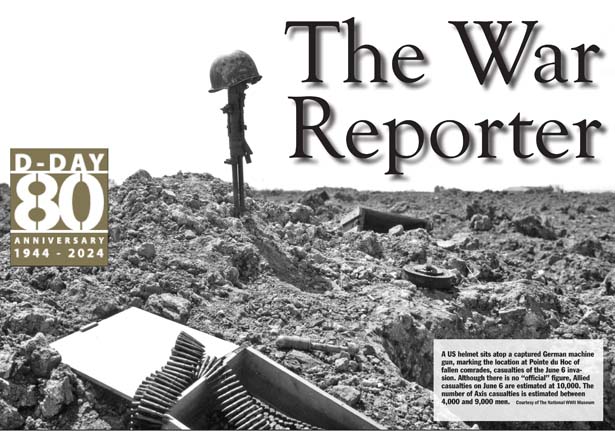
CLEMSON — June 6, 2024, marks the 80th anniversary of D-Day landings along the Normandy coast during World War II. Lifelong Tiger and reporter Wright Bryan made history that day, too, by broadcasting “the first hour” of his eyewitness account.
Did you know the first voice America heard from the frontlines on D-Day belonged to a Clemson man?
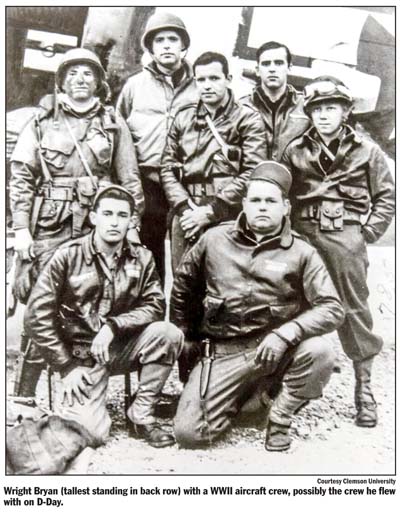 Wright Bryan was a distinguished journalist, University administrator and historian whose love for Clemson spanned his entire life. A 1926 graduate, Bryan literally grew up on the Clemson campus. His father, Arthur Buist Bryan, enrolled in Clemson in 1890 (one year after the
You must be logged in to view this content.
Subscribe Today or Login

A True Sense of Place and Belonging
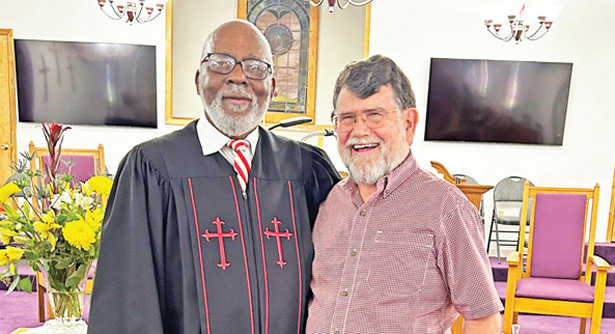
By Dr. Thomas Cloer, Jr.
Special to The Courier
For Black History Month, we have focused on the book Liberia, South Carolina: An African American Appalachian 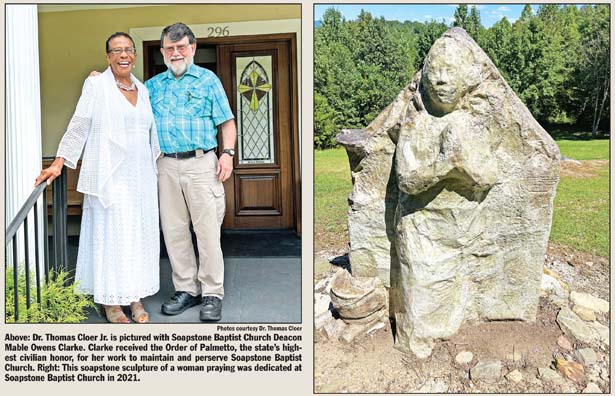 Community, by Dr. John M. Coggeshall, an Anthropologist and Professor at Clemson University. Liberia is a historic community that dates back to the abolition of slavery here in upper Pickens County, South Carolina. Soapstone Baptist Church and Soapstone School date back to the Emancipation Proclamation, and are part of a community
You must be logged in to view this content.
Subscribe Today or Login
Soapstone Baptist Church: A Link to the Distant Past
By Dr. Thomas Cloer, Jr.
Special to The Courier
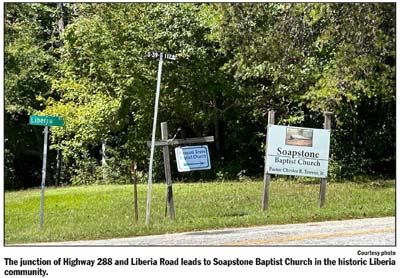
Soapstone Baptist Church, a historic Black Church, is located in an area here in Upper Pickens County called 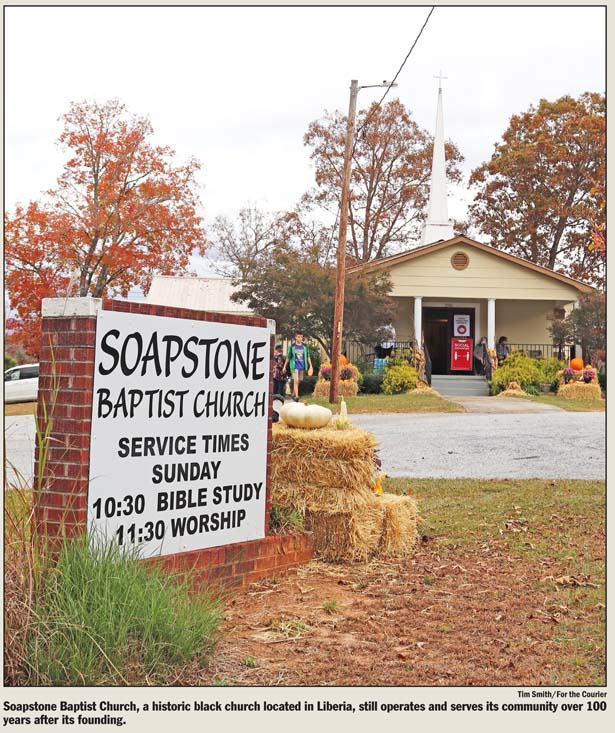 Liberia, South Carolina. The name, Liberia, dates back to the continent of Africa. As I write, Soapstone Baptist Church is still functioning on Liberia Road after all these years. The Church started shortly after President Lincoln’s Emancipation Proclamation freed those in slavery. You can attend and worship in this Black Church with people who had ancestors in slavery right here in Pickens County.
 In the same year (1967) that my wife and I were finishing our undergraduate work at Cumberland College in the Kentucky Mountains, and after deciding to teach in Upper Pickens County, SC, we received some very shocking and disturbing news. White supremacists had burned and destroyed the old sacred Soapstone Baptist Church building in Liberia, not very far from Holly Springs School where we were going to teach. The old Soapstone Church had served as a refuge for freed slaves, and for the descendants of enslaved people, for over a century.
However, the soul and spirit of the historic Soapstone Church did not burn, did not die. It still functions today in a different building. I am reminded of the words of Harriet Tubman, the great Black Abolitionist who so eloquently said, “We’re rooted here now, and they can’t pull us up.” The members of Soapstone Baptist Church are indeed deeply rooted.
My Upstate South Carolina Ancestors
My Mom’s maiden name was Grace Moody. My Moody ancestors were here in the old Pickens District, now Pickens and Oconee Counties, when slavery was common. They were here by the late 1700’s. My great-great-great-great Grandfather, Daniel Moody, and his son, Martin Moody, acquired land on the Toxaway River, Devil’s Fork, Crow Creek, Little River, and on the south side of Keowee River. Daniel Moody is buried in the old Wolfpit Cemetery at the Cheohee Community Center, now in adjacent Oconee County. Cheohee Community Center is located on Cherokee Lake Road in the Cheohee Valley.
Daniel Moody’s birth date was only three years different from the eighth President of the United States, Martin Van Buren. Their lifespans were similar. Daniel Moody’s son, Martin Moody, was a namesake of President Martin Van Buren. Daniel Moody’s grandson, Daniel Van Buren Moody, was also a namesake of the eighth President of the United States. President Martin Van Buren was President for one term only, 1837-1841. I expected to find political controversy about slavery from the moment I discovered the one term only of the relatively young president.
Moody Ancestors and Slavery in Pickens District
About the time that my ancestor Daniel Moody died in 1854, there were 248 families with slaves in the Pickens District. In 1840 there were 2,715 Black people in the Pickens District who had been bought and “owned.” By 1850, ten years later, that number of slaves had more than doubled to 5,808.
I have tried diligently to learn about my Moody ancestors during slavery in our area. I had pressing questions that needed answers. The first question, of course, was, “Did my Moody ancestors here in the old Pickens District have slaves?” They owned much land.
Exhausting all the resources I can find; I have concluded that my Moody ancestors in this area had no slaves. If they didn’t have slaves, what were their attitudes about enslavement? What were President Martin Van Buren’s views on slavery? How did his views affect his Presidency? I sensed a connection between President Martin Van Buren’s views of slavery because he only served the one term. He finished that term in 1841 when he was only in his 50’s, and certainly too young to retire from office because of age.
Another thing that piqued my interest was that Daniel Moody’s son, Martin Moody, was Pastor of Cheohee Baptist Church in the old Pickens District in 1838. I hypothesized that Martin Moody, as a pastor, probably saw himself as a moral voice to those whom he ministered in his congregation. My Moody ancestors were charter members of Cheohee Baptist Church. Would Martin Moody’s search for ultimate truth about religion, morality, and slavery influence his choice of names for his son, Daniel Van Buren Moody?
Antislavery President Martin Van Buren
President Martin Van Buren was one of the first politicians to suggest that slavery was immoral. His exact statement was, “Morally and politically speaking, slavery is a moral evil.” He introduced a bill forbidding the importation of slaves. President Martin Van Buren tried to stop the slave trade. The pro-slavery politicians openly opposed Martin Van Buren’s reelection bid, and were responsible for his one term only as President of the United States.
It is clear to me that Daniel Moody and his son, Martin Moody, felt that slavery was a moral problem. That helps explain the namesakes of Martin Moody and Daniel Van Buren Moody. However, the South’s economy was such that many people in the Pickens District thought their livelihood relied on the evil of slavery. Many people in our area really feared that people such as Martin Van Buren and Abraham Lincoln would end slavery, or severely limit it.
Ancestors Divided Over Slavery
I knew there was a later split among my Moody ancestors over slavery when I saw that my Great-GreatGrandfather, ironically named Daniel Van Buren Moody, had left his father’s home here in the old Pickens District, and fled to Jackson County, North Carolina. There he joined the Confederacy on May 30, 1861. Later, he was a casualty at the Battle of Fredericksburg in Fredericksburg, Virginia, while serving in Company B, 25th Regiment of the North Carolina State Troops, and Confederate States of America.
This division among my ancestors over slavery was indicative as to how the Civil War divided families. For example, three half-brothers of Mrs. Abe Lincoln died as Confederate soldiers. In another family, John Crittenden was a Senator from Kentucky. One of his sons was a Confederate General. Another son was a Union General.
I saw the deep divisiveness among my Moody ancestors when I found my Great-Great-Great Grandfather Martin Moody’s Last Will and Testament here in Pickens’ old records. Martin left his son, the Confederate soldier, Daniel Van Buren Moody, with nothing in his will because the son left home “without just cause as I think.” The son left home and fought for the Confederacy, who had chosen not to be part of the United States of America if slavery was abolished.
Free at Last: A New Beginning
I think it important to note that historic Soapstone Baptist Church originated in April, 1865. This was the month 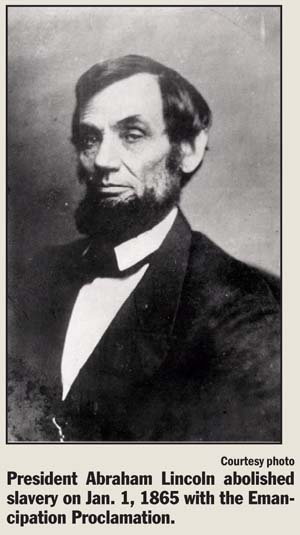 and year that the President of the United States, Abraham Lincoln, was assassinated by a promoter of white supremacy. The assassin was John Wilkes Booth. The message of white supremacists had always been the same. No Black individual or supporter thereof was ever safe unless white supremacy was the norm.
President Abraham Lincoln signed the Emancipation Proclamation that freed the slaves on January 1, 1865. Union General Tecumseh Sherman, and Secretary of War, Edwin Stanton, met with a large group of Black Baptist and Methodist Ministers to discuss what needed to be done after slavery was abolished. They met on January 12, 1865, in Savannah, Georgia. There was no doubt about what the freed slaves needed; they needed land.
The Need for Land After Emancipation
Union General Sherman and Secretary of War Stanton liked the idea of using formerly held Rebel plots of land. That action would get the freed slaves away from Union military lines. A special order was issued that all formerly held Rebel lands between Charleston, SC, and the St. John’s River in Florida would be given to free slaves in 40 acre plots. That, of course, didn’t happen, and freed slaves for the most part, stayed close to where they had been enslaved. That is what happened with the freed slaves at Liberia here in Upper Pickens County.
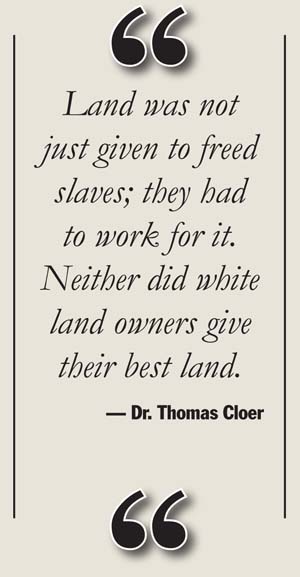
Land was not just given to freed slaves; they had to work for it. Neither did white land owners give their best land. This is what occurred at Liberia, according to Professor John Coggeshall, a Professor and Anthropologist at Clemson University, and author of Liberia, South Carolina: An African American Appalachian Community. Dr. Coggeshall’s book is available in paperback and hardback online. It is really an encyclopedia of information about this historic Liberia Community. For example, the second chapter is titled “You Zip Your Lips.” It tells about life in slavery here in the Pickens District as Dr. Coggeshall’s research pulls back the curtains for all to consider.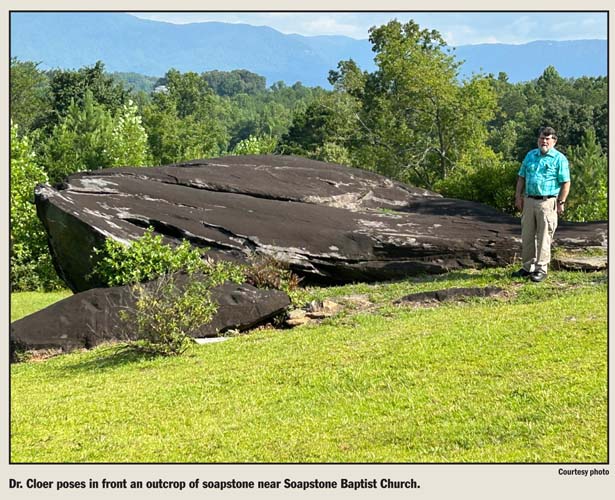
Many freed slaves in our area stayed close to their previous enslavement. They needed and wanted land. Soapstone was a hilly and rocky place at Liberia with no obvious place to cultivate. The soapstone mineral in the area had been formed from intense heat and moisture within the earth. The mineral has a soapy feel. Indigenous people used it for such things as utensils, bowls, and smoking pipes. The premises of Soapstone Baptist Church and Soapstone School have many beautiful soapstone outcroppings. They make for a real wonder and treat to see.
The property for the homes in the community of free slaves, where Soapstone Baptist Church and Soapstone School would be located, became home for the ancestors of Mable Owens Clarke. Mrs. Mable Owens Clarke is still there today as I write. She is a very busy Deacon at Soapstone Baptist Church today.
Next Week, Part 2: Reconstruction and White Backlash after Emancipation
About the Author: The author received his Bachelor’s Degree from Cumberland College in the Kentucky Mountains, his Master’s from Clemson, and his PhD. from the University of South Carolina. He was the first South Carolina Professor of the Year, being chosen by the Governor’s Office and the South Carolina Commission on Higher Education.
Publishing partners
Clemson students help Central Academy of the Arts second-graders become authors
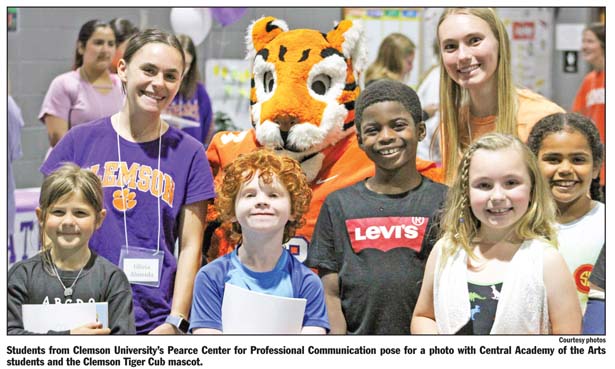
CENTRAL — Clemson University students at the Pearce Center for Professional Communication helped local second-graders at the Central Academy of the Arts (CAA) achieve the dream of becoming authors this spring.
 Working together, the students created a 140-page book, titled “Our Favorite Animals,” which
You must be logged in to view this content.
Subscribe Today or Login
Southern Appalachian Mountain dialect: Purt nigh gone?
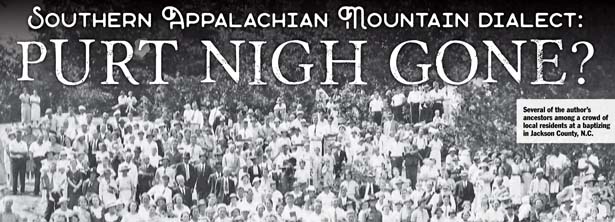
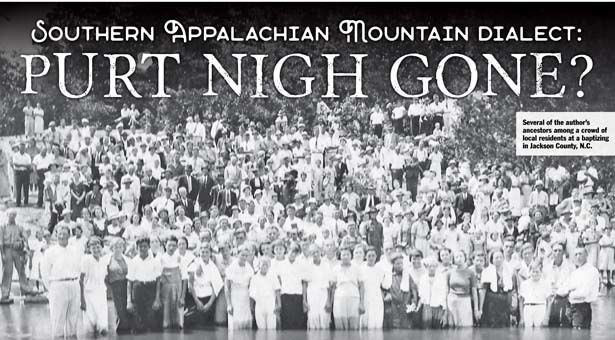
Revisiting the regional history of the English language
By Dr. Thomas Cloer, Jr.
Special to The Courier
The Southern Appalachian Mountain dialect is a topic of interest for people in our area. There are those questioning whether or not it still 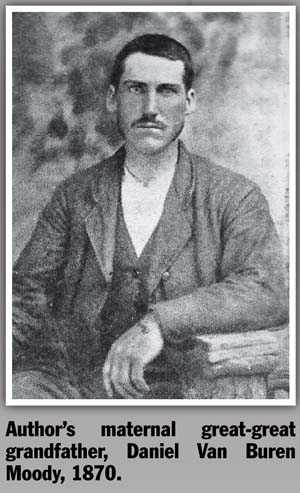 exists.
The writer wishes to deal with this question by carefully examining past and current Southern Appalachian language. Three main areas of emphasis will be explored: (1) Do any archaic English words, used by early immigrants in Southern Appalachia, still occur in our language in an age of Modern English? (2) Does any of
You must be logged in to view this content.
Subscribe Today or Login
Finding the right Father’s Day gift
Father’s Day is an annual celebration of fathers and the contributions they make to their families. Dads get their due on Father’s Day, when  sons, daughters and wives typically give dad a few gifts to show their appreciation for all he has done for them and how much he means to them.
Finding the right Father’s Day gift is not always so easy. No two fathers are the same, so while a silk necktie might bring a smile to one father’s face, such a gift may fall flat with other dads. By asking themselves a few questions in the weeks before their dads’ big day,
You must be logged in to view this content.
Subscribe Today or Login
How to make the big day more enjoyable for Dad

Dad gets to be king of his castle at least one day during the year. Come mid-June, children near and far scramble for ideas to treat their fathers to a special day and award him with gifts for being a role model, provider and confidante. Father’s Day activities should be centered  around Dad’s interests. With that in mind, the following are some ideas to honor Dad or another special man in your life.
- Sports Sunday: If Dad is a sports fan, his idea of spending a fun-filled afternoon very well may be cheering on his favorite players. Whether your father enjoys golf, tennis, baseball, soccer, or another sport like hunting or fishing, chances are there is a television broadcast on that you can watch together. Otherwise, you canYou must be logged in to view this content.
Subscribe Today or Login